


Obesity: what is it, what are the risks for our organism and our life!
Lets be clear with regards to obesity and overweight, when we talk about one or the other, lets learn the differences and especially the risks.
First of all we must start by saying that both obesity and overweight are causes of physical disability, reduced working capability and can also be the cause of several chronic diseases such as heart disorders, metabolic disorders and endocrine disorders and both reduce the persons life expectancy by a lot.
DIFFERENCES BETWEEN OBESITY AND OVERWEIGHT
Obesity is a pathological condition that is in continuous growth especially, in western countries and also Europe is not immune to it at all: Great Britain is the most obese nation of the European continent with a very high childhood obesity, and this is also growing fast in Italy. With regards to Great Britain it has been calculated that two thirds of the adult men and more than half of the adult women are either overweight or obese. Between 1995 and 2002 In England obesity has doubled in boys from 2.9% to 5.7% whilst in girls it has increased from 4.9% to 7.8%. Therefore 1 out of 5 boys and 1 out of 4 girls are either overweight or obese. Amongst young men aged between 16 to 24 obesity has increased from 5.7% to 9.3%, whilst in young women it has increased from 7.7% to 11.6%. Don’t you think that these figures are rather alarming?
The main causes of this spread are mainly wrong eating habits, mostly distinguished by the consumption of high energy foods and also sedentarity. There are also other organic causes like hypothyroidism, hereditary and other causes that can lead to obesity, but mostly the behavioural and eating factors are those that cause all this obesity and the rapid increase of this problem, with a relative increase of several diseases: diabetes, heart attack, osteoarthritis, sleep apnea and certain types of cancer.
To calculate if you are overweight or obese you can calculate your Body Mass Index or BMI by calculating your weight in kg divided by your height in metres squared (kg/m2). For example an adult who weighs 70kg and is 1.75m tall has a BMI of 22.9.
Those who classify as overweight or obese are the ones with a Bmi equal to or higher than 25 and 30. Usually a BMI between 18.5 and 24.9 classifies a person as “normal weight”, whilst a person with a BMI between 25 and 29.9 is a person with “increased risk” meanin overweight and with the risk to develop the associated disorders. Finally a person with a BMI equal to or over 30 has a high risk of being obese. Naturally the higher the value the more serious and disabling the obesity becomes.
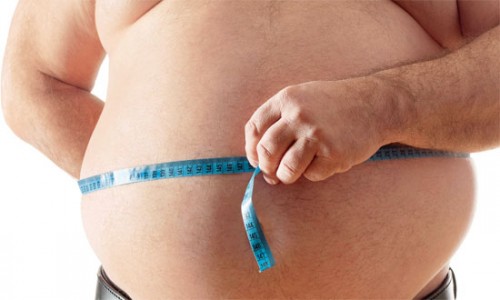
This calculation can give us an idea but surely does not give us a complete picture of the person and infact it is also necessary to understand how the fat is distributed and on the total quantity present in the organism, both are very important data especially since the fat deposited in certain places rather than others is particularly dangerous. Another necessary parameter is measuring the circumference of our waist, if is is higher than 94-102cm in men and 80-88cm in women than this means that the person has an excess of abdominal fat and is therefore at risk of encountering serious health problems, even if there Bmi is more or less normal..
OVERWEIGHT AND OBESITY RISKS
The health related risks in overweight and obese people are several, from the increase of premature death to several debilitating and psychological disorders that are not fatal, but can influence negatively the quality of life:
- Type 2 Diabetes
- Cardiovascular diseases and hypertension
- Respiratory diseases (sleep apnea syndrome)
- Certain types of cancer
- Osteoarthritis
- Psychological problems
- Alteration of the quality of life
The majority of these problems can already be partially solved with a loss of weight without needing to undergo any particular type of therapy, just by increasing physical exercise.
Particular attention must be paid towards the connection between overweight and breast cancer, obesity and intestine, colon, stomach and pancreas cancer.
Breast cancer is a femminine pathologie which presents a very strong hereditary component and its risk increases progressively with age. There are also risk factors that can be prevented and certain behoviours if modified they are capable of reducing the risk enormously the first amongst all is overweight.
The adipose tissue (fat) is infact the body part in which most of the estrogens and testosterone are elaborated after menopause.
The possibility to develop this type of cancer is infact linked to the concentration of sex hormones and fat in excess and is considered one of the main risk factors.
Take a look at our tried and tested method: Anti-Diet


Leave A Comment