


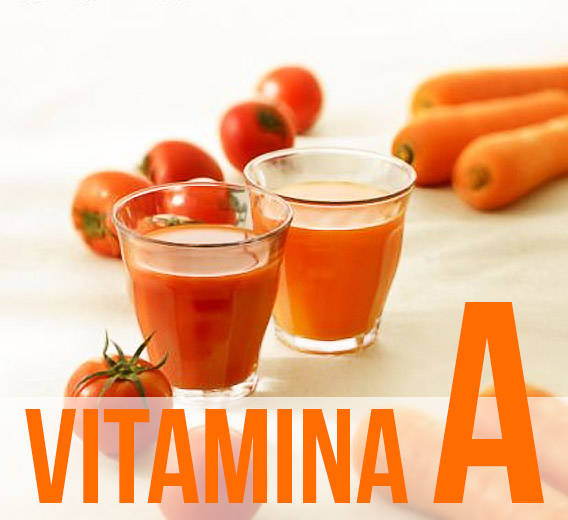
The winners are:
- Chards, Turnips & Mustard
- Pumpkin
- Dandelion roots (do not eat it if treated with a herbicide)
The best groups:
- Meat (especially liver)
- Orange & green vegetables
- Integrated food.
What is Vitamin A & why is it important?
Vitamin A comes from a group of nutrients called retinoids, which help keep healthy eyesight, skin, bone development, reproduction, mucous membranes & cells. Vitamin A is mainly found in liver making it an excellent source. The RDA for vitamin A is 5000UI alwaus calculated on a 2000 calorie diet.
Too much!
An excess of vitamin A coming from animal sources may be toxic however it is not if it comes from plants. If an excessive quantity is consumed it may make our skin become orange in colour, but it is a reversible condition that does not provide any side effects & is called carotenaemia. An excessive form of retinol deriving from vitamin A (animal sources) also known as hypervitaminosis A may lead to birth deficiencies, abnormality in our liver, osteoporosis or even death. Most cases of hypervitaminosi A come from integrated supplements and not our diet.
Which are the foods that contain vitamin A?
Liver
Calf (veal) liver is one of the richest in nutrients foods known, it is a very good source of choline, copper, folate, iron, niacin, phophorus, protein, vitamin B12, zinc, pantothenic acid & selenium. Liver has also a very low quantity of fat but unfortunately very high values of cholesterol, therefore it is advisable to limit its consumption to once or twice weekly.
Carrots
Carrot juice represents a very good source of Alpha & beta Carotene, lutein & zeaxanthin. Carrot juice found in cartons contains up to four times more beta carotene & up to five times more alpha carotene if compared to raw carrots. You should also know that that 1 cup of carrot juice has almost 700mg of potassium, more that any other fruit or vegetable. Lutein & zeaxanthin, present not only in carrot juice can help against Macular degeneration (blindness).
Pumpkin
Pumpkin also provides us with a good amount of fibre, Vitamin A & antioxidants. It also contains many other nutrients such as, alkaloids, flavonoids, linoleic, oleic & Palmitic acid, which find there use in diabetes & cancer prevention.
Sweet Potatoes
A baked sweet potato provides us with a lot of fibre, Vitamins A, B6 & c, iron, magnesium, niacin, phosphorus, potassium, riboflavin & thiamin. Sweet potatatoes are also useful for people suffering from type 2 diabetes for 2 reasons, because it has beneficial effects on monitoring & controling Glucose & HBA also with a better insulin receptivity. It was also proven that sweet potatoes helps reducing fibrinogen (blood clots) & therefore is also good for who suffers from heart diesease.
Spinach
Boiled spinach is a very good source of calcium, folate, iron, magnesium, riboflavin, vitamin A, B6, C, E & K; also fibre, phosphorus, potassium, thiamine, & zinc. It was also shown that spinach has a relaxing effect on arteries & therefore reduces the risk heart diesease & high blood pressure.
Chards
Chards are a very good source of calcium, folate, magnesium, Vitamin A & C, iron & fibre If your aim is to lower cholesterol level than these vegetables should be boiled or steamed. This method is proven to be more effective than if your were to eat them raw or cook them in another way.
Kale (leaf cabbage)
Boiled chopped cabbage is a very good source of Vitamin A, c & K, fibre, iron, phosphorus, & also vitamin B6. It is also proven that cabbage half a cup of cabbage juice a day raduces radically LDL cholesterol.
Take a look at our tried and tested method: Anti-Diet


Leave A Comment