


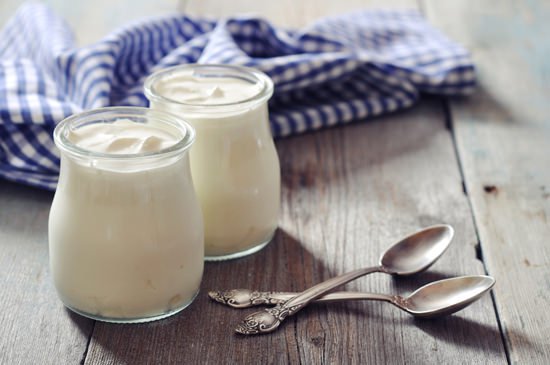
How to choose a natural & healthy yoghurt!
Which is the right way to choose a good yoghurt, not all are the same & unfortunately even those so called bio & light sometimes have some hidden surprises, therefore choosing it carefully & with the right ingredients is fundamental!
Made from bacteria known as “yogurt cultures” & milk, yoghurt is one of the simplest & healthiest foods, although there is a wide selection on the market not all are healthy from the nutritional point of view, most of them infact are enriched with artificial substances like fruit compounds, sugar & other types of additives to make them tastier but this way the naturalness & genuinity of the yoghurt are lost.
Yoghurt is a very ancient food & can be traced back already to neolithic times, actually it forms itself alone when milk is left at room temperature for a few hours it becomes acidic & dense, this way it modifies its chemical & organoleptic characteristics. Only milk fermented by the action of 2 particular bacteria: LACTOBACILLUS BULGARICUS e STREPTOCOCCUS THERMOPHILUS can be called yoghurt.
HOW DO WE CHOOSE A GOOD YOGHURT?
In order to choose well we must read the label carefully & it must contain the following:
- Few & natural ingredients, possibily only milk & lactic ferments or a very low percentage of fruit & sugar
- No preservatives & artificial flavours
- The milk’s place of origin
- The biological quality
In the supermarkets’ refrigerators we find plenty of products, each one with different characteristics, for example whole milk yoghurts are richer in fat, but at the same time they are more nourishing & filling & very often light yoghurt does not mean healthy if it is full of added sugar, therefore pay attention to the labels. The biological brand label can certainly give us an extra bit of security. It is also interesting to know that by law yoghurt must have an expiry date but it does not to be so strict since the expiry date indicates the bacteria that from the date of expiry they start to become thinner, hence the yoghurt can still be consumed for another 1-2 weeks after the expiry date but we must just know that there wont be any bacteria present anymore.
Very often the labels try to fool us, lets see the most common TRICKS used:
- The presence of “hidden” sugar, often infact we read glucose syrup, fructose, sucrose, dextrose, sorbitol, grape sugar, in reality sugar is broken p into these categories to minimize the real quantity.
- Natural looking packs, we often find “natural”, Traditional” ect written but they would still contain additives.
- The addition of yoghurt cream, it is added and increases fat & calories, turning the yoghurt into a dessert.
- The prsence of powdered milk, (this is only accepted in importated yoghurt because in italy it is not yet allowed)
- The origin of the milk is not indicated, this means little product tracebility therefore not clear.
Therefore we must pay attention to the labels & don’t take for granted that yoghurt necessarily means healthy!
Amongst all the varieties white plain youghurt is the most reccomended as long as it does not contain added sugars, it is a perfect mix of carbs, protein & fat made more digestable thanks to the presence of lactic acid that improves even the absorption of calcium. Even Greek yoghurt is an excellent choice because it is very filling, it is a concentration of calcium & protein & is naturally sweet, for fruit yoghurts the same rule applies, that is read carefully the label & make sure that it contains natural fruit & not compound. Greek yoghurt is obtained from the leakage of the serem & it is made from only milk & ferments which make it more compact. With regards to soy yoghurt, it is actually a milk less product obtained from soybeans to which ferments are added in order to give it the taste of milk. It is also suitable for vegans & has less fat than a lets say standard yoghurt, but it does not contain calcium unless it has been added & listed on the label.
Take a look at our tried and tested method: Anti-Diet


Leave A Comment