


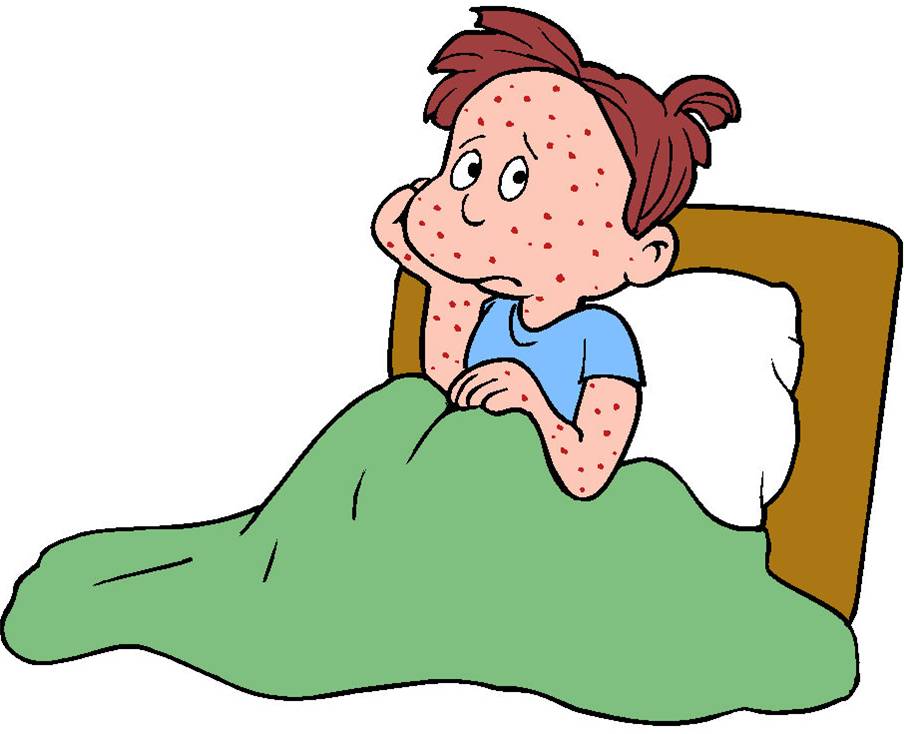
TREATING CHICKENPOX!
Chickenpox very common in children, dangerous in adults, lets find out more and see how we can treat it!
Chickenpox is often defined as a children’s disease, but actually chickenpox is an exanthematous disease that should not be underestimated at all especially in adults and in fact it is mostly a prevalent disease, also because it boasts impressive numbers (500 thousand new cases per year, almost one per minute) with very high social costs equal to approximately 100 million euros.
The most affected are certainly children especially in the Spring months, when the number of cases reaches the annual peak.
According to experts, however chickenpox is not an inevitable step of childhood, but it is the last exanthematous disease widely diffused as yet that could be prevented with a simple vaccination, hence putting in safety all children and in particular that 3-5% (20 thousand cases) of children bound to encounter rather serious complications, such as for example bacterial superinfections, medium otitis, endocarditis, pneumonia, complications to the central nervous system.
In reality the complications arise more as a person gets older or during pregnancy with a significant risk of encountering with even more likely the risk of serious complications. The World Health Organization (WHO), gives out the warning to recall to vaccination especially in countries where the disease is considered to be a significant problem of public health and where it is possible to reach high and lasting vaccine coverage.
But let us see what this really is!
WHAT IS CHICKENPOX AND HOW DO WE TREAT IT
Chickenpox is highly contagious infectious disease caused by Varicella Zoster Virus (VZV), belonging to the Herpesviruses family. Together with rubella, measles, whooping cough and mumps, chickenpox is inserted amongst the contagious diseases of childhood, which in the majority of cases affect children between 5 and 10 years.
Man is the only known carrier of this virus: the disease is therefore transmitted only from man to man.
HOW TO TREAT CHICKENPOX: SYMPTOMS AND DISEASE RESPONSE
After an incubation of about 2 or 3 weeks, the disease manifests itself with a skin rash, fever that is not too high and slight general symptoms such as headache. For 3-4 days, small pink itchy sort of blisters (blemishes) appear on the head, chest, face and limbs. The blemishes evolve into blisters, then into pustules and finally into granular crusts, destined to fall.
Chickenpox is generally a benign disease that heals within 7-10 days but as we have already said chickenpox tends to have a more aggressive path in adolescents and adults and can be particularly serious if it affects immunocompromised humans (people with infections like HIV, persons undergoing chemotherapy or in treatment with steroids for asthma or other diseases).
It is a disease that takes place only once, however the virus is not eliminated by the organism, but remains latent (generally for life) in the ganglia of spinal nerves’ roots. In 10-20% of the cases the virus wakes up at a distance of years or decades, usually after the age of 50, giving life to the herpes zoster, commonly known as “St. Anthony’s fire”.
HOW TO TREAT CHICKENPOX: THERAPY
There is in fact a therapy only for the symptoms and in fact for the itching antihistamines may be used, while paracetamol for the fever.
In the cases that are most at risk of complications (adolescents, people with chronic respiratory diseases or treatment with steroids) and in family secondary cases one can recall to antiviral drugs such as acyclovir (the drug that treats also herpes)
Generally the advice of doctors is to rest and stay home in order to avoid contagion, for at least five days after the appearance of the first spots.
Take a look at our tried and tested method: Anti-Diet


Leave A Comment